

Specific diagnosis of back pain
There is emerging evidence that it is possible to make provisional or clinical based diagnoses of back pain problems. Following a thorough initial assessment the following diagnoses can be confirmed.
Disc herniation with associated radiculopathy - based on below knee symptoms, CT/MRI confirmed disc herniation (having at least nerve root contact = greater certainty) and at least one of a positive straight leg raise or lower limb neurological sign
Reducible discogenic pain – positive to at least 4 of the following features (higher number = greater certainty): aggravating factors of sitting, forward bending, lifting, sit to stand, cough/sneeze, worse next morning following injury, history of manual handling job, flexion/rotation mechanism of injury and positive response to mechanical loading strategies (most often extension in lying)
Non-reducible discogenic pain – positive to at least 4 of the discogenic features and not responsive to mechanical loading strategies
Zygapophyseal joint pain – at least 3 of the following features: unilateral and localised symptoms, a regular “compression” pattern reproducing symptoms during active movement testing (extension + ipsilateral lateral flexion), a comparable z-joint finding on lumbar palpation and positive response to mini-treatment
Sacro-iliac joint pain - at least 3 of the following features: pain provocation with distraction test, compression test, thigh thrust test, Gaenslen's test, sacral thrust test or active straight leg raise test
Multi-factorial persistent pain – not fitting any of the pathoanatomical subgroups and having an Örebro score of above 105/210 (high score = greater certainty)
The easiest way of learning how to provide specific treatment for back pain is by downloading the STOPS.physio summary for back pain.


Specific treatment of back pain
Specific treatment begins with a provisional or clinical diagnosis that can then be linked to effective treatment. The results from the STOPS trials show that people with:
Disc herniation + radiculopathy or non-reducible discogenic pain respond well to specific muscle activation leading to a functional motor control program
Reducible discogenic pain respond well to directional preference management and a motor control program
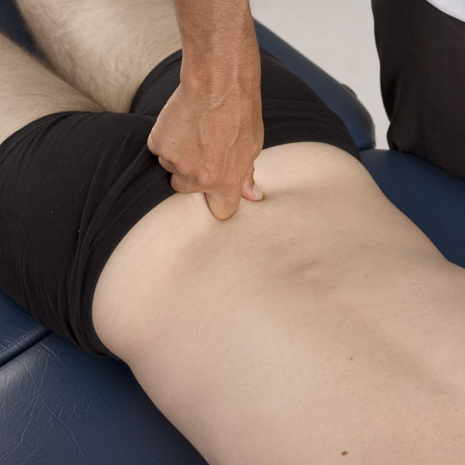
Z-joint pain respond well to specific manual therapy using Maitland based clinical reasoning and a motor control program
An absence of a pathoanatomical diagnosis and higher levels of psychosocial factors require a time contingent graded activity program
However specific treatment goes beyond diagnosis by understanding that pain is multifactorial. By developing a prioritised list of barriers to recovery the application of specific treatment becomes more efficient and effective. Further information on barriers to recovery including an illustrative case study can be seen here.